Countries, regions, restaurants and chefs have signature dishes that make them distinguishable from others or their competitors; cities, on the other hand, not so much.
Think about it: Is there a single dish that defines Otavi or a dish that we could describe as Tsumeb or Karibib on a plate? I don’t think so.
This applies even to most of the larger cities in the Southern African region. In my opinion, two exceptions to this trend are Cape Town and Durban.
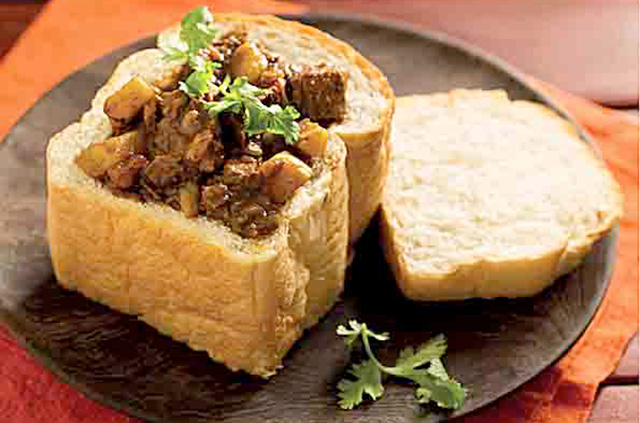
Cape Town has the gatsby and Durban has the bunny chow.
Elsewhere Philadelphia has the Philly-steak sandwich; Chicago has deep-pan pizza; New Orleans has gumbo and the po’ boy and so forth.
I recon for a dish to be considered a city’s signature dish, it has to meet several criteria which include most of the following:
First, the dish must have originated in the city or at least been tweaked or developed into its current form in the city.
All signature dishes are part and parcel of the history of the city and all of them are imbedded into the socio-historical and cultural fabric of the city. Each signature dish has a ‘founding myth’ and that myth forms part of the ‘official’ as well as ‘popular’ local history. It may or may not be verifiable, but it is widely known and shared, and as such, no other city can lay claim to the same founding myth.
Second, the dish must have great and wide popular appeal among the inhabitants of the city. No dish can be considered a signature dish if it is not well-loved and popular among those who live in or have visited the city. Typically, there is no seasonality to a signature dish; it is always available.
Third, a signature dish is accessible. This invariably means that such dishes are available from most popular food-selling vendors who may or may not specialise in this one dish. It is most likely a ‘street food dish’ rather than a ‘fine dining dish’ although fine dining establishments may serve fancy upscaled versions of the dish. Nearly everyone makes and/or sells one or more versions of this dish and nearly everyone develops and adds new versions to the ‘standard’ or ‘traditional’ one. Invariably, there are fierce and never-ending debates about who makes or sells the best version of the dish in the city and/or neighbourhood. Often, they are for sale in late night establishments where people meet after a generous night out.
Fourth, the signature dish is affordable. It is reasonably priced and represents good value for money. Often, portions are substantial and these are ideal dishes to share, which in turn means that younger generations are brought up on the dishes. As a result, they never go out of fashion.
Fifth, these dishes become part of the official history of their city and are part of the formal marketing of the city. They are the food component of the list of ‘must-do’s’ when in the city and tourists often go out of their way to get to try the signature dish at least once. The popular description ‘been there, done that; got the T-shirt’ summarises (in some cases, quite literally) the quest for the signature dish.
I have been craving a proper bunny chow for some time now; one that is made from the true decedents of the Banias that crossed the great big ocean to become sugar cane cutters in a far-off land. To make one at home the curry must be just right; in fact, it must be Durban-right, which means quite spicy. The bread is just a plain white loaf that you can buy anywhere as long as it is fresh. To complete the dish, serve it with some pickled carrot salad and sambals.
And please, eat it with your hands.
It tastes better that way, I promise you.
• 500 grams mutton (boneless), cut into bite-sized pieces
• 4 tablespoons ghee
• 1 bay leaf
• 3 cinnamon sticks
• 1 teaspoon fennel seeds
• 1 onion (large), chopped
• 1 sprig curry leaf
• 2 teaspoons ginger and garlic paste
• 1⁄4 teaspoon turmeric
• 4 tablespoons masala
• 3 sprig fresh coriander, chopped finely
• 1 medium tomato, chopped
• Salt (to taste for seasoning)
In an age of information overload, Sunrise is The Namibian’s morning briefing, delivered at 6h00 from Monday to Friday. It offers a curated rundown of the most important stories from the past 24 hours – occasionally with a light, witty touch. It’s an essential way to stay informed. Subscribe and join our newsletter community.

The Namibian uses AI tools to assist with improved quality, accuracy and efficiency, while maintaining editorial oversight and journalistic integrity.
Stay informed with The Namibian – your source for credible journalism. Get in-depth reporting and opinions for
only N$85 a month. Invest in journalism, invest in democracy –
Subscribe Now!