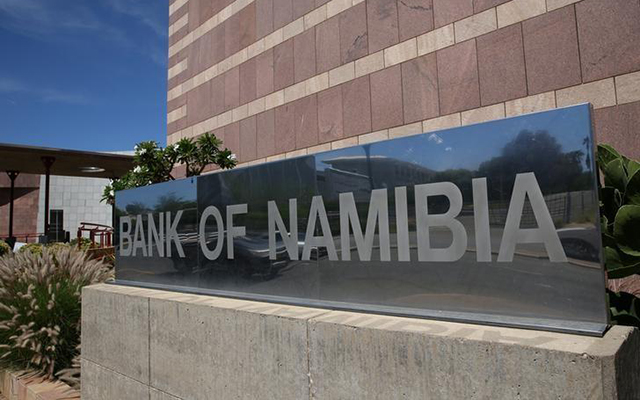
The Bank of Namibia (BoN) has indicated that traders of government securities, especially treasury bills, are not colluding when proposing how much to buy these treasury bills for, but the auctions have rather just become very competitive.
This is from speculation that traders are submitting bids that are more or less the same, giving the central bank very limited options to identify successful bids.
The central bank is the sole borrowing agency for the government auctions millions of dollars’ worth of treasury bills on a weekly basis in an attempt to raise N$1,5 billion this year.
Overall, the borrowing requirement for the state is set at N$10,08 billion for the 2023/24 fiscal year, and an analysis by The Namibian on past treasury bill auction results indicate that on many occasions the average offer price from bids is almost equal to the best and worst bid.
This could suggest some collusion by traders, but BoN spokesperson Kazembire Zemburuka says there is nothing odd about this and that government debt securities have a diversified pool of investors, including banks, asset managers, pension funds, private institutions and private clients.
On offer last week, for example, were 91-day, 182-day, 273-day and 364-day treasury bills, which all had a minimal difference of N$0,07 at most on their offer price between the highest and average bids.
Zemburuka says this should be expected since government debt issuance has declined, largely attributable to the decline in the budget deficit.
“… while demand remains elevated. This, in turn, has increased competition among investors for these assets,” he says.
The usual buyers of treasury bills are commercial banks, and for all government securities, the banks also hold up to 34% of government securities.
Data from the central bank shows over N$36 billion outstanding in treasury bills, of which over N$25 billion (70%) is held by commercial banks.
This means much trading takes place at commercial banks, which do not have many traders. These traders are also familiar with each other.
On whether the central bank was worried about this single source of funding from commercial banks, Zemburuka says the sources of financing for government debt instruments are diversified, and investors buy these instruments depending on their respective needs and investment horizons.
“Commercial banks generally prefer shorter dated instruments, because they are more liquid and are in line with their asset allocation and regulatory requirements.
“Thus, they bid competitively to ensure allocation. There is therefore no reason for concern in this regard. Further, treasury bills comprise a mere component of the overall borrowing by the government, which remains well-diversified across the investor pool,” he says.
The state continues to attract over N$2 billion per treasury bill auction, indicating plenty of available cash requiring for safe and better-paying instruments in the local economy.
In March, the central bank indicated that despite the local commercial banks being 34% exposed to government securities, nothing points to a bank run, and depositors’ money is safe.
At the time, Zemburuka said Namibia’s banking system remained resilient and sound, with solid capital and liquidity buffers in place to withstand risks emanating from internal and external shocks.
The Namibia Financial Institutions Supervisory Authority’s spokesperson said the authority has not received any reports of collusion by asset managers they oversee.
Asset managers are the second-biggest traders of treasury bills, but are bigger on bonds compared to commercial banks.
Email: lazarus@namibian.com.na
Twitter: @Lasarus_A