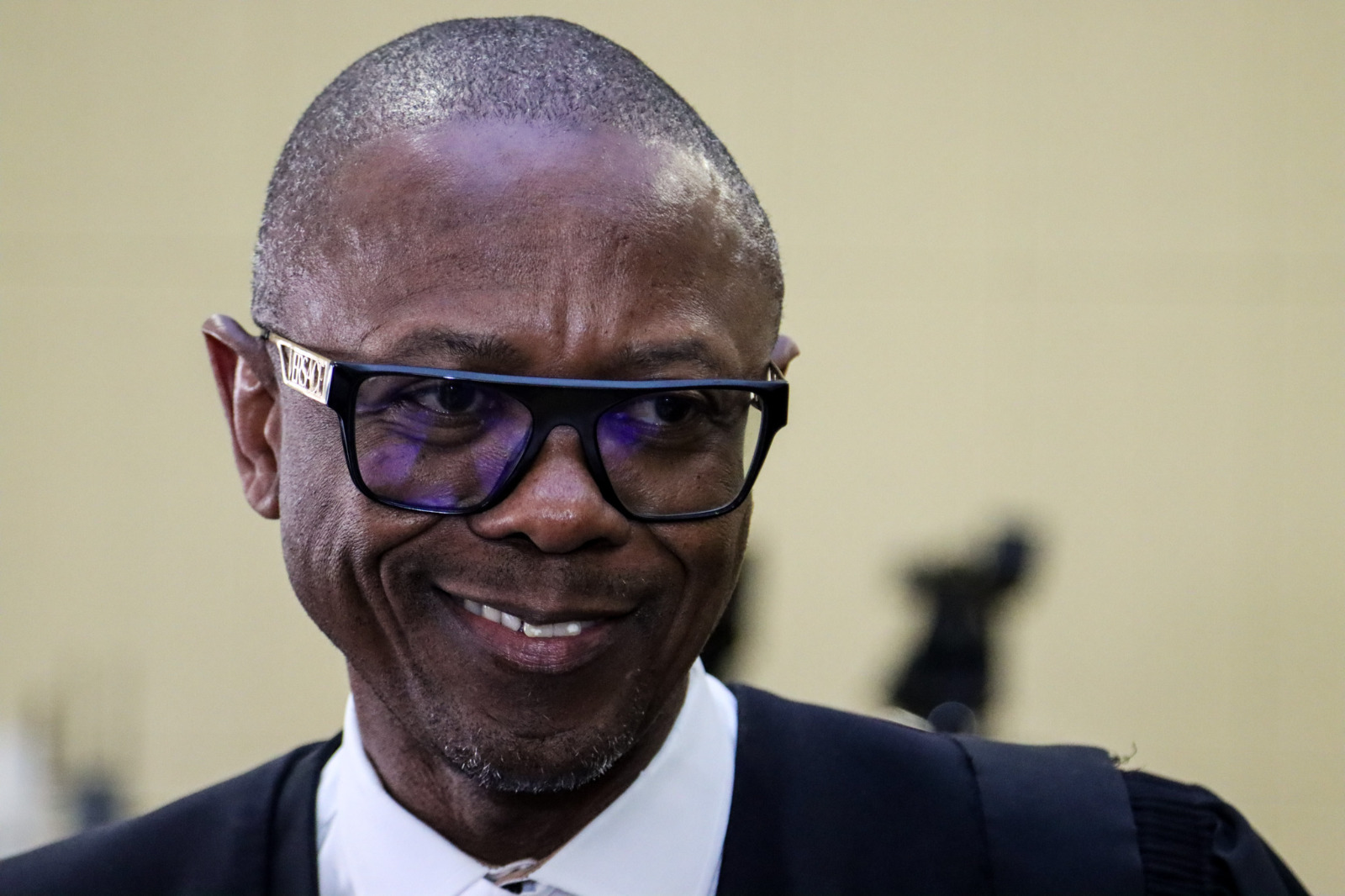





Minister of urban and rural development James Sankwasa has questioned the widespread view of rural Namibia as being poor.
He says rural communities play a critical role in feeding urban areas and should be recognised for their contribution to the economy.
Speaking at an event to introduce the International University of Management’s Graduate School of Business to the Southern African Development Community on Wednesday, the minister said Namibia needs to rethink its perception of poverty, education and development.
“You always hear concepts of saying the rural poor, the poor people in the rural areas,” he said.
Sankwasa asked how urban residents could be considered better off when they depend on produce from rural areas.
“Who is poor in Namibia? Is it the rural area? Is it the urban area? Because the urban area residents, like you and me, we’ve got Shoprite. That’s where we buy our milk, our vegetables, our eggs and our potatoes,” he said.
“But I haven’t seen a cow being delivered in Windhoek. I haven’t seen a chicken in Windhoek. But those are the things we buy from the rural areas. So the rural area is feeding the urban area, but we still say the rural area is poor and the urban area is rich. How can a person who is feeding you be poor and you be rich?”
He said the country’s education system should place greater emphasis on practical skills that allow young people to create livelihoods rather than depend solely on formal employment.
The minister said he had observed builders, plumbers, tilers and other skilled foreign workers working on construction projects in Namibia and questioned where they acquired their skills.
He said these countries’ curriculums allow schoolleavers to acquire skills that can be used immediately.
African education systems need to be restructured to ensure pupils are equipped with skills relevant to their communities and economies, Sankwasa said.
“We cannot solve current and future problems with yesterday’s solutions. We need to move on,” he said.
IUM Graduate School of Business director Blessing Tafirenyika on Wednesday said the institution is also focused on ensuring business education and research respond to Namibia’s own challenges.
She said while technologies such as artificial intelligence tools can provide information, they do not always provide answers specific to Namibia.
She said the school wants to strengthen local research and innovation so that knowledge produced in Namibia can better explain the country’s realities.
Tafirenyika called on businesses and other organisations to work more closely with the school by sharing their challenges with researchers, participating in programmes and providing industry perspectives to students.
She said local examples should be used in teaching, including allowing professionals from institutions such as the Bank of Namibia and the Namibia Securities Exchange to share practical knowledge with students.
International University of Management (IUM) founder and council chair David Namwandi at the occasion said the university must continue reinventing itself to meet changing national and global needs.
“The constant future of IUM is that we are unstoppable in reinventing ourselves,” he said.
Namwandi said institutions such as IUM have a responsibility to anticipate the needs of future generations while ensuring education contributes to sustainable livelihoods.
He encouraged greater confidence in local institutions, arguing that supporting local businesses and institutions helps keep money circulating within the country and contributes to local employment and economic activity.
The IUM Graduate School of Business currently offers postgraduate and executive programmes designed to combine academic knowledge with practical business skills.